Our Story: Connecting Uganda’s Finest Coffee to Morocco’s Growing Industry
At Gold Green World, we believe exceptional coffee begins long before roasting. It begins with trusted relationships, transparent sourcing, and a deep understanding of both origin and market needs.
Our mission is simple: to create a reliable bridge between Uganda’s high-quality coffee producers and Morocco’s evolving community of roasters, distributors, and coffee professionals. We are not simply green coffee importers. We are long-term partners committed to quality, traceability, and sustainable business relationships.
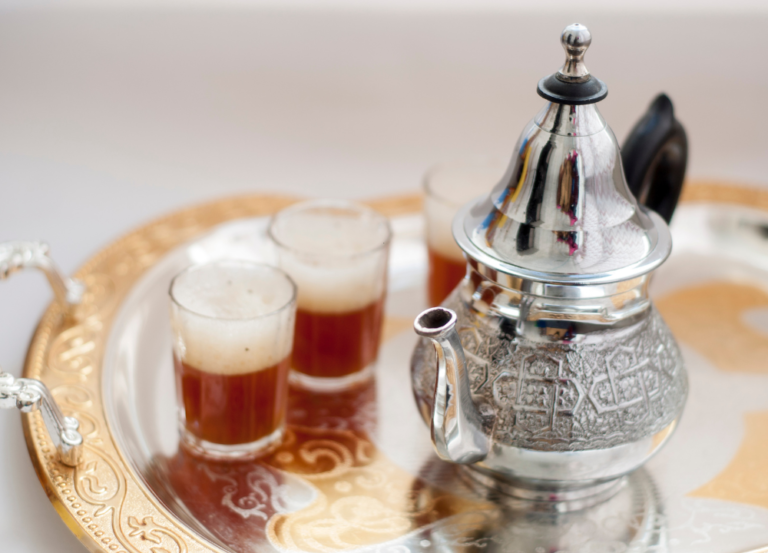
Traditional dallah coffee pot, Marrakech – symbol of Morocco’s coffee heritage
The Challenge We Set Out to Solve
The Moroccan coffee industry continues to grow rapidly, yet many importers and roasters still face recurring challenges:
- Inconsistent bean quality caused by fragmented supply chains
- Limited transparency in pricing and product traceability
- Complex logistics involving multiple intermediaries
- Difficulty securing dependable, long-term origin partnerships
- Lack of direct communication between producers and buyers
Gold Green World SARL was founded to address these gaps with a more transparent, structured, and partnership-driven approach.
The Vision Behind Gold Green World
GGW is blessed to have one of our directors, Omar BENMEDDOUR, whose international career spans more than two decades across agro-food industries, manufacturing, and international business operations. His experience includes leadership roles in Algeria, Hong Kong, and international trading environments where operational precision, supply chain management, financial discipline, and cross-border negotiation were essential.
This background gives GGW a unique advantage:
- A strong understanding of international agro-food supply chains
- The ability to structure transparent and reliable trade relationships
- Expertise in operational management and quality compliance
- A practical understanding of both producer realities and buyer expectations
Mr. BENMEDDOUR’s multilingual capabilities in Arabic, French, and English also allow seamless communication between Moroccan buyers and Ugandan suppliers — reducing misunderstandings and building trust at every stage of the process.
Our Strategic Partnership in Uganda
Strong supply chains are built on strong partnerships. That is why GGW works closely with The Edge Trading Limited, a trusted Ugandan coffee supplier deeply connected to the country’s coffee-growing regions. The MD for The Edge has been in the coffee industry for over 30 years and brings a great deal of wisdom to this partnership.
Through our long-term collaboration and formal partnership, we have established a sourcing framework designed to deliver consistency, transparency, and scalability. Our partnership includes:
- Direct access to premium Ugandan Robusta green coffee beans
- Monthly supply capacity of up to 120 metric tons
- Quality standards aligned with ICO Resolution No. 407/02
- Controlled moisture levels, screen sizing, and foreign matter specifications
- FOB Mombasa shipping terms for optimized logistics management
- Flexible pricing models, including ICE/LIFFE-linked and fixed-price structures
- Pre-shipment sampling and buyer protection procedures
Together, The Edge Trading Limited provides the strength at origin, while Gold Green World SARL delivers the commercial structure, market expertise, and confidence required by Moroccan importers and roasters.
“To empower Moroccan coffee roasters and coffee businesses with reliable, traceable, and high-quality Ugandan green coffee through transparent partnerships, operational excellence, and long-term collaboration.”
What Makes GGW Different
Traditional Importers
- Multiple intermediaries
- Reactive quality checks
- Unpredictable pricing
- Transaction-focused relationships
- Limited origin visibility
- Generic trading approach
Gold Green World SARL
- Direct Ugandan sourcing partnership
- Pre-shipment sampling and ICO-aligned specifications
- Flexible ICE/LIFFE-linked or fixed-price models
- Long-term partnership framework
- Full traceability and transparent sourcing
- Agro-food expertise with international operational experience
Our Commitment to Our Partners
When you work with GGW, you gain more than a supplier. You gain:
- A sourcing partner who understands both origin operations and industrial roasting needs
- Greater traceability from Uganda to Morocco
- Structured logistics and risk-management processes
- Transparent communication and commercial clarity
- Long-term reliability built on mutual growth and trust
Whether you are a coffee roaster, distributor, wholesaler, or value-added processor, our goal is to help you secure dependable access to quality Ugandan coffee with confidence.
Building Trust, One Shipment at a Time. We may not be the largest coffee importer in Morocco — but we aspire to become one of the most trusted. At GGW, every shipment represents more than trade. It represents partnership, transparency, and a shared commitment to quality. We invite you to join us in building a stronger connection between Uganda’s coffee producers and Morocco’s growing coffee future.
The Moroccan Coffee Legacy
9th Century
Berber tribes in desert regions develop wild coffee processing — sun-drying and roasting over open fires, creating the "desert black gold" tradition.
~1420
Legend of Moroccan scholar Abu al-Hasan al-Shadhili — while traveling in Ethiopia, he experiences coffee's invigorating effects and introduces plants to Yemen, founding the port of Moka.
16th Century
Coffee arrives in Morocco via trans-Saharan trade routes. Initially a luxury for the elite, it slowly spreads through Sufi circles.
18th Century
First coffee houses (qahwa) appear in Fes and Marrakech. Coffee becomes a social beverage, though still secondary to mint tea.
20th Century
French colonialism brings espresso culture, café terraces, and the spread of coffee drinking. Home recipes like Qahwa Ma'atra (spiced coffee) flourish.
Our Core Values
- Traceability — We honour the ancient trade routes by knowing every farm and cooperative, from Uganda to Morocco.
- Fair pricing — Continuing the ethos of equitable exchange that built the spice roads, ensuring producers receive fair value.
- Quality first — Like the legendary Moroccan scholars, we believe in uncompromising standards, backed by ICO-aligned specs.
Today's Moroccan coffee landscape
Morocco imports nearly 58,000 tonnes of coffee annually (2024), with Robusta representing 70–75% of volume. But Arabica is rising fast, driven by tourism and specialty cafes. Average consumption is 1.3kg per person — but with the boom in coffee shops and young urbanites, that's set to grow. Gold Green World is proud to provide consistent, traceable Ugandan Robusta and Arabica to meet this surging demand.